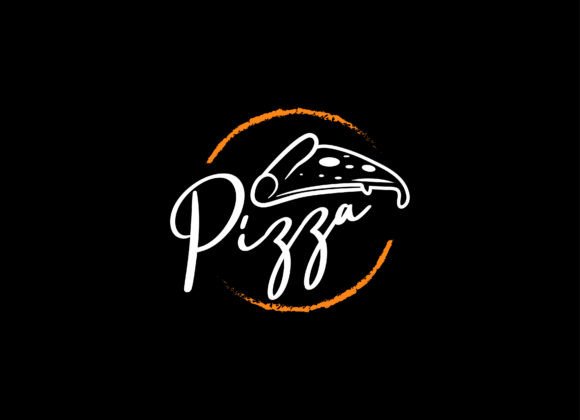
Slice Pizza Logo Design: A Flexible Foundation for Your Brand Identity
In the crowded landscape of food service and casual dining, visual identity is often the first point of contact between a business and its potential customer. A Slice Pizza Logo Design does more than simply label a menu; it encapsulates the texture, flavor, and atmosphere of the establishment before a single bite is taken. For entrepreneurs launching a pizzeria, food trucks, or catering services, selecting a logo that balances appetizing imagery with professional versatility is a critical strategic decision. The modern market demands assets that are not only visually striking but also technically robust enough to scale across digital platforms, merchandise, and large-format signage.
The evolution of branding in the culinary sector has shifted away from rigid, static images toward dynamic, adaptable systems. Today's creators and business owners understand that a logo must perform equally well on a smartphone screen as it does on a delivery van. This necessity drives the demand for high-quality source files, specifically those available in vector formats like EPS and Adobe Illustrator compatible documents. When you acquire a comprehensive design package that includes SVG, JPEG, PNG, and PDF variations, you are securing a toolkit that ensures your brand remains crisp and legible regardless of the medium.
The Technical Backbone: Why Vector Files Matter
Understanding the difference between raster and vector graphics is essential for anyone investing in a professional logo. Raster images, such as standard JPEGs or PNGs, are made of pixels. While they look fine at specific sizes, stretching them leads to pixelation and blurriness. In contrast, the core value of a premium Slice Pizza Logo Design lies in its vector foundation. By providing an EPS file, the design ensures infinite scalability without any loss of quality.
For best results, try to open the EPS Ai file using Adobe Illustrator. This industry-standard software allows designers and non-designers alike to manipulate the geometry of the logo with precision. Whether you need to shrink the icon for a social media avatar or expand it for a billboard, the mathematical curves that define the pizza slice remain perfectly smooth. This technical reliability is what separates amateur clip art from a legitimate brand asset. It future-proofs your investment, ensuring that as your business grows and your marketing channels diversify, your logo never looks outdated or low-resolution.
Mastering Customization and Adaptability
One of the most significant advantages of owning the source files is the ability to tailor the design to your specific brand voice. A generic template is rarely perfect out of the box. With access to the editable layers within the Adobe Illustrator environment, you can change the colors to match your interior decor or align with current color psychology trends. Perhaps your pizzeria leans towards a rustic, warm aesthetic requiring deep reds and burnt oranges, or maybe you are aiming for a modern, minimalist vibe with stark blacks and whites. The flexibility to adjust these hues instantly transforms a template into a bespoke identity.
Beyond color, the structural elements of the logo are equally malleable. You can remove unwanted text, edit the curves path to refine the shape of the cheese or crust, add or remove elements like herbs or toppings, and adjust resizing or positioning to fit various layouts. This level of control is vital for maintaining consistency across different applications. For instance, you might create a simplified version of the logo for mobile apps where space is limited, while keeping the detailed version for packaging and menus. The ability to deconstruct and reconstruct the design empowers business owners to maintain creative autonomy without needing to hire an external agency for every minor tweak.
Navigating Typography and Text Constraints
While the graphical elements of a Slice Pizza Logo Design offer extensive flexibility, typography requires a slightly different approach. It is important to note that the text included in many template designs is often non-editable text converted into outlines or paths. This means you cannot simply double-click and retype "Joe's Pizzeria" if the original says "Slice Pizza." Instead, if you want to create your own text with the same font that used from this template, you need to download and install the font first.
This requirement highlights a crucial aspect of professional design workflows: font management. Identifying the typeface used in the logo allows you to maintain typographic harmony when creating secondary materials like business cards, invoices, or website headers. Many modern templates use custom or licensed fonts that are not standard system defaults. By taking the time to locate and install the correct typeface, you ensure that your new text matches the weight, spacing, and style of the original graphic perfectly. This attention to detail elevates the perceived professionalism of your brand, signaling to customers that you care about the finer points of presentation.
If the specific font is unavailable, a practical alternative is to work with a designer who can suggest similar typefaces that complement the geometric style of the pizza slice icon. The goal is to achieve a cohesive look where the text and the icon feel like they belong together, rather than appearing as two separate elements pasted onto one another.
Color Management: RGB vs. CMYK Considerations
A common pitfall in digital design is the confusion between color modes. The preview and design use RGB Color, which stands for Red, Green, and Blue. This additive color model is optimized for screens, including monitors, smartphones, and tablets. RGB offers a vibrant spectrum that captures the eye in digital environments, making your logo pop on websites and social media feeds. However, it is crucial to remember that RGB colors may shift when printed.
When preparing your Slice Pizza Logo Design for physical applications—such as printing flyers, t-shirts, or signage—you will likely need to convert the file to CMYK (Cyan, Magenta, Yellow, Key/Black). Most professional printers require CMYK files to ensure accurate color reproduction. Fortunately, because you have the editable EPS or AI file, this conversion is straightforward within Adobe Illustrator. You can switch the document mode, adjust the color profiles, and verify how the vibrant digital colors translate to ink. This dual capability ensures that your brand maintains visual integrity whether a customer sees it online or holds a flyer in their hand.
Aligning with Modern Branding Trends
The relevance of a versatile logo template extends beyond mere utility; it reflects broader shifts in consumer behavior and market expectations. In recent years, there has been a marked move toward authenticity and approachability in food branding. Consumers are increasingly drawn to brands that feel human, accessible, and transparent. A Slice Pizza Logo Design that features clean lines and recognizable shapes taps into this desire for clarity. Unlike overly complex logos that struggle to be understood at a glance, a well-executed slice icon communicates the product immediately.
Furthermore, the rise of the gig economy and the proliferation of small-scale food businesses mean that speed-to-market is more important than ever. Entrepreneurs no longer have the luxury of waiting weeks for a custom logo from a high-end agency. They need solutions that allow them to launch quickly while still looking professional. High-quality template files meet this need by providing a polished starting point that can be customized rapidly. This democratization of design tools allows hobbyists and serious business owners alike to compete on a visual level with established chains.
Technology continues to drive these changes. As augmented reality and interactive digital menus become more common, the need for scalable, lightweight vector graphics like SVG becomes even more pronounced. These formats load quickly and render sharply on high-resolution displays, enhancing the user experience. By choosing a design package that prioritizes these modern file types, you are aligning your brand with the technological trajectory of the industry.
Practical Implications for Business Growth
For professionals and freelancers managing multiple clients, the efficiency gained from using editable logo templates is invaluable. Being able to deliver a complete suite of files—including PDF for print-ready proofs and PNG with transparent backgrounds for web use—streamlines the workflow significantly. It reduces back-and-forth communication regarding file formats and ensures that the client receives everything they need to launch their marketing campaign immediately.
Moreover, the ability to adapt the logo over time provides long-term value. Brands evolve. A pizzeria might start as a delivery-only ghost kitchen and later open a brick-and-mortar location. Having the master EPS file allows you to iterate on the design, perhaps adding a tagline, changing the layout for a storefront sign, or simplifying the icon for a new app interface. This longevity makes the initial investment in a high-quality, multi-format design package a smart financial decision.
Ultimately, a Slice Pizza Logo Design is more than just a picture of a pizza. It is a strategic asset that, when managed correctly through the right file formats and editing practices, serves as the cornerstone of a successful brand identity. By leveraging the power of vector graphics, understanding typography constraints, and managing color modes effectively, you can create a visual presence that resonates with customers and stands the test of time.